Back to Resources
Waterbox Divider Plate: Blown Gasket, Erosion Damage, Cogeneration Plant
Carbon steel divider plate, blown gasket, cooling water erosion, Maryland cogeneration facility.
Blown gasket and eroded carbon steel divider plate at a Maryland cogeneration plant rebuilt with structural epoxy, fiberglass reinforcement, and a flexible epoxy caulk at the tubesheet joint, completed April 1991 with no deterioration on annual inspection since.
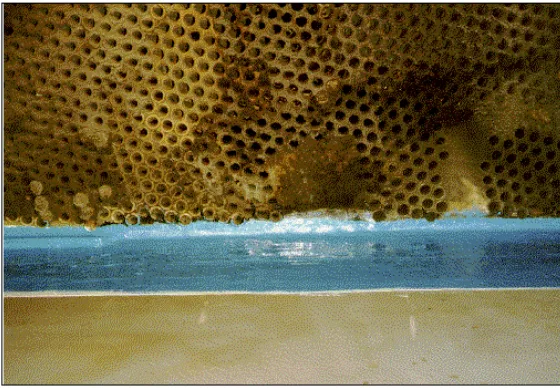
Waterbox Divider Plate Gasket Rebuild · Refuse-Fueled Cogeneration Plant, Maryland
The Problem
Blown Gasket, Eroded Plate — A Compounding Failure
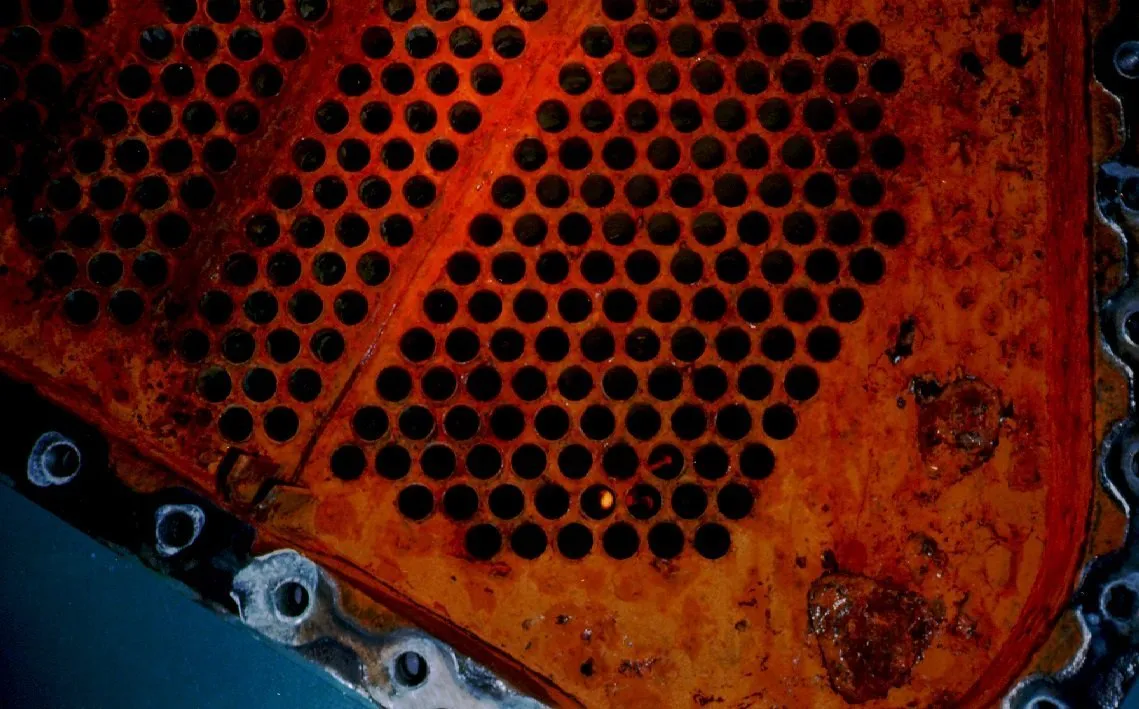
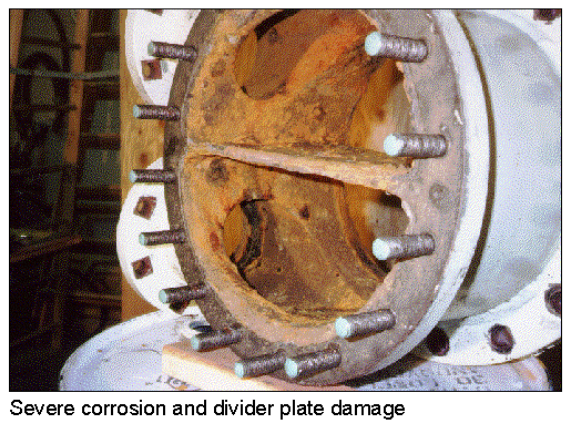
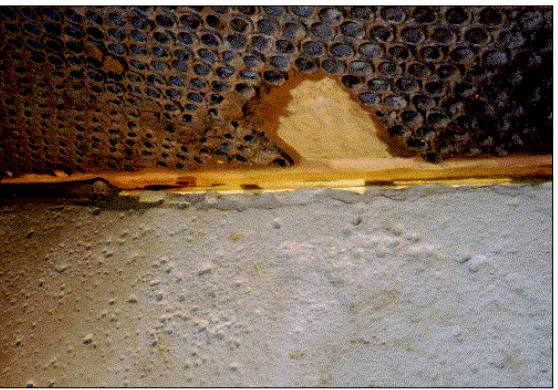
The gasket sealing the waterbox divider plate to the tubesheet blew out. Once that seal was lost, cooling water was no longer contained to its intended flow path. Instead it was bypassing the gasket interface and eroding the carbon steel divider plate directly. By the time the unit came down for repair, the plate had suffered significant material loss at the erosion zone.
Critical Variable
The Compounding Failure Mode
The gasket failure is the trigger, but the erosion it causes creates a secondary structural problem that has to be addressed before any new gasket can seal properly. Replacing the gasket alone would not have solved it.
The Solution
Structural Rebuild, Fiberglass Reinforcement, Flexible Joint Seal
Installation
April 1991
Substrate
Carbon Steel Divider Plate
Surface Preparation & Base Coat
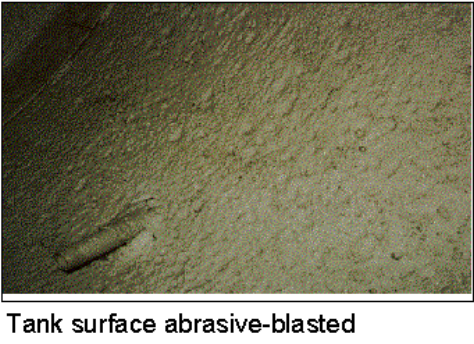
Both the top and bottom of the divider plate were abrasive-blasted to SSPC SP-5 white metal with a 3-mil anchor profile. A quarter-inch gasket material was cut to match the original plate thickness and glued to the tubesheet to re-establish the correct mating surface. A high-performance epoxy base coat was applied and allowed to set.
Structural Epoxy Rebuild
With the base coat cured, a sheet of plexiglass was propped against the bottom of the repair area to act as a temporary form. A structural epoxy rebuilding compound was squeegeed into the eroded zone and built up flush with the surrounding substrate. When the plexiglass was removed, the repair filled cleanly to the edge of the new gasket line.
Fiberglass Reinforcement & Finish Coat
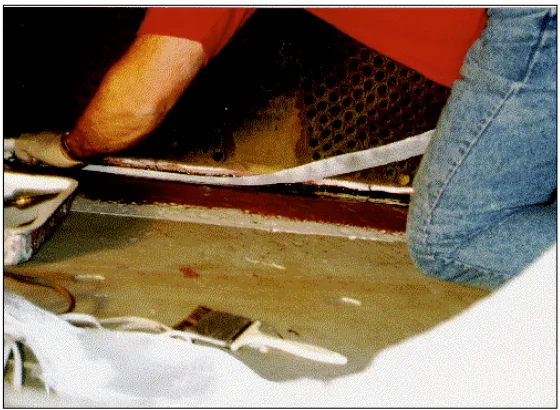
Ten layers of 9.5-ounce fiberglass strips were installed on each side of the plate, each wet out with the same structural epoxy resin used to fill the eroded zone, reinforcing the rebuilt area and distributing load across a wider footprint than the repair zone alone. A finish coat of high-performance immersion-grade epoxy was applied over the completed layup.
Flexible Joint Seal
A bead of flexible epoxy caulk was applied at the tubesheet-to-waterbox joint. This material is high-elongation and fully compatible with the surrounding epoxy system, allowing it to move with the joint over time without disbonding.
The Result
The repair was completed in April 1991. Annual inspections have been conducted since installation. Each inspection has confirmed the repair is performing as well as the day it was completed, with no deterioration, delamination, or loss of seal integrity at the gasket interface.
What This Case Demonstrates
A Blown Gasket Is Rarely Just a Gasket Problem
When cooling water has been bypassing a seal and eroding the substrate behind it, the plate geometry is compromised and no new gasket will hold reliably until that geometry is restored. This case shows how a combination of structural epoxy rebuilding, fiberglass reinforcement, and flexible joint sealing can address all three parts of the problem in a single repair scope. The fiberglass layup in particular is what gives this repair its durability. Rather than relying on a monolithic fill, the layered composite system handles stress at the interface over time without cracking or disbonding.

High-performance epoxy systems for industrial repair and protection.