Back to Resources
Coal Silo Transition Coating: Dissimilar Material Corrosion and Abrasion Protection
Fossil Fuel Power Plant — U.S.A.
Fossil Fuel Power Plant · U.S.A.
The Problem
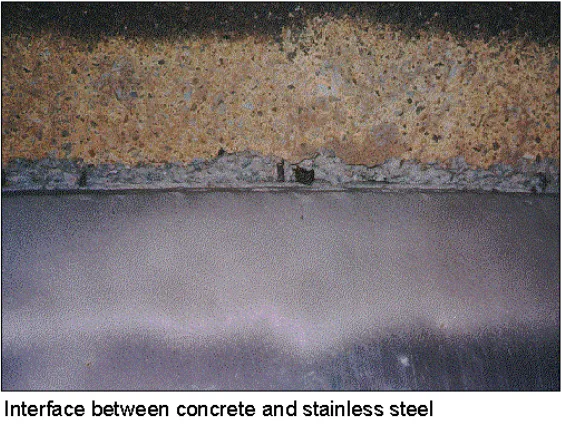
Dissimilar Material Corrosion at the Concrete-Stainless Interface
A coal storage facility required protective coating at the interface where each concrete silo transitions to a stainless steel funnel section. The system had to address two simultaneous demands:
Electrochemical Corrosion
When damp coal bridges the concrete-stainless interface, an electrochemical corrosion cell forms at the joint — attacking both substrate materials from a single contact point.
Continuous Abrasion
Coal throughput runs continuously against the transition surface. The coating system also had to bond effectively to both concrete and stainless steel simultaneously.
Specification
Four-Stage System Across Dissimilar Substrates
Application
Silo-to-Funnel Transition Interface
Substrates
Concrete & Stainless Steel
Silos Completed
8
Stage 1 — Surface Preparation
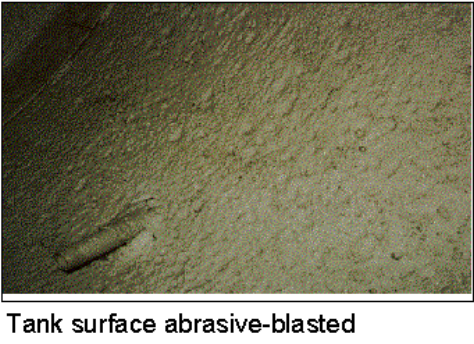
Concrete chipped back at the interface to allow weld seam inspection. Brush blast on concrete, profile blast on stainless steel.
Stage 2 — Joint Fill
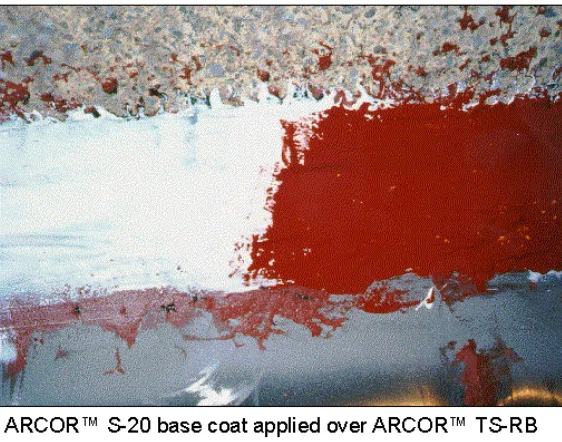
Rebuilding compound applied by squeegee to form a smooth transition from the concrete silo onto the stainless funnel.
Stage 3 — Abrasion Layer
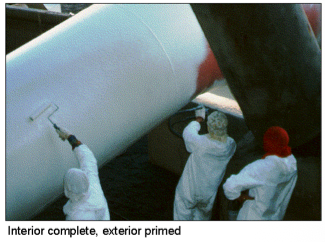
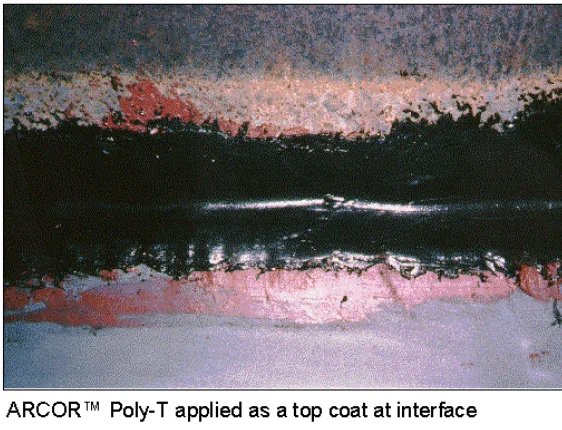
Two coats of high abrasion protective coating, the first being a white coat then the second being a red coat to visualize the layering and wear
Stage 4 — Topcoat
Top coated with a high surface energy protective coating to improve flow of material
Eight silos completed across June and July 1988.
The Result
Six Years to First Maintenance — No Structural Failures
Annual inspections confirmed the system performing. In October 1994 — six years after installation — an additional layer of abrasion resistant material was applied to replace wear from coal throughput. No structural corrosion failures reported.

High-performance epoxy systems for industrial repair and protection.