Back to Resources
Concrete Floor Repair: Acid and Caustic Attack, Demineralized Water Area
Acid and caustic attack on concrete flooring, demineralized water takeup area, fossil fuel power plant.
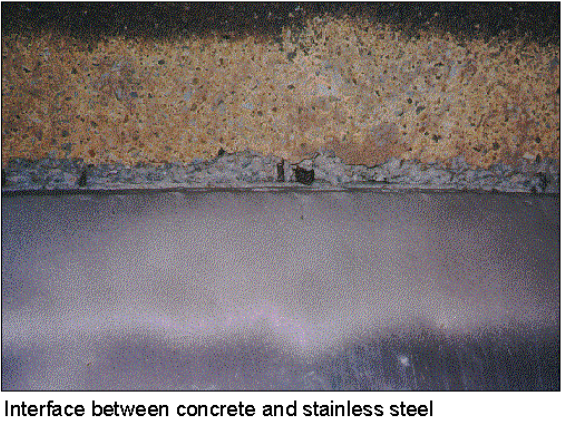
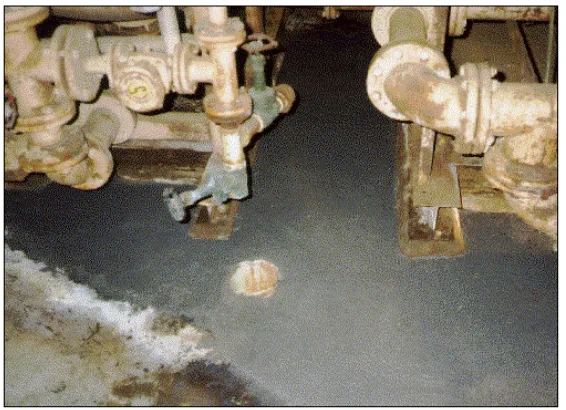
Concrete floor damaged by acid and caustic attack leveled with epoxy-modified concrete repair material and topcoated with a chemical-resistant epoxy system, completed March 1991.
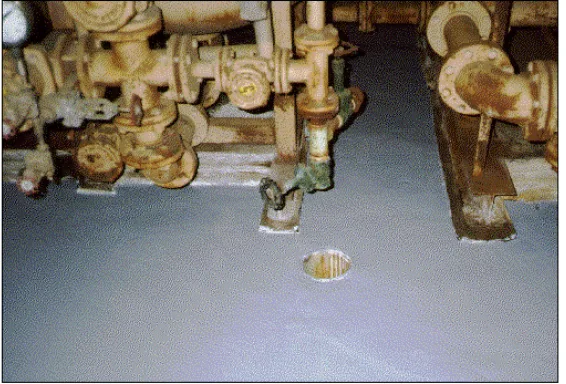
Concrete Floor Repair · Demineralized Water Area, Fossil Fuel Power Plant, USA
The Problem
Sustained Chemical Attack — Cement Paste Dissolved, Aggregate Exposed
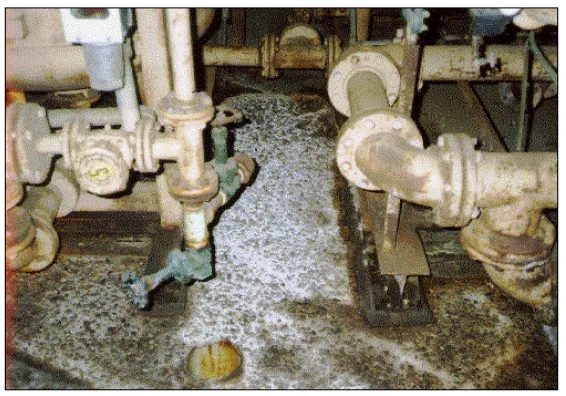
The concrete floor in the demineralized water takeup area had been under sustained chemical attack from acids and caustic solutions present in the process environment. The attack had progressed far enough to dissolve the cement paste from the concrete matrix, leaving the aggregate exposed across the surface.
What Exposed Aggregate Means
Exposed aggregate is not just a surface cosmetic issue. It signals that the concrete binder has been compromised, the surface is now porous and irregular, and continued chemical exposure will accelerate deterioration into the substrate below.
Why Demineralized Water Environments Are Particularly Aggressive
Demineralized water is highly purified and ion-deficient, which makes it chemically hungry. It leaches calcium and other minerals from concrete readily, and when combined with the acids and caustics present in this area, the attack on the floor surface was compounded.
The Solution
Fast-Cure Epoxy Leveling, Same-Day Topcoat — Restored in a Single Outage Window
Installation
March 1991
Substrate
Concrete Floor
Surface Preparation
The floor was cleaned with trisodium phosphate and high-pressure water to remove contamination and loose material, then allowed to dry fully before any repair work began.
Epoxy-Modified Concrete Leveling Course
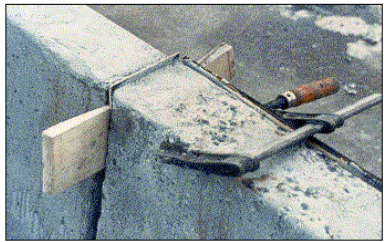
Applied by trowel to level the floor surface, building up to one inch in depth in the areas of greatest loss. This material reached sufficient cure in approximately six hours at 70°F, allowing the project to move to the coating phase the same day without extended downtime.
Chemical-Resistant Epoxy Topcoat
A two-coat chemical-resistant epoxy system was applied over the entire floor once the leveling course had cured, providing ongoing protection against the acids and caustics present in the environment.
Critical Variable
Six-Hour Cure vs. 28 Days
Conventional concrete requires 28 days to reach working strength. A repair that cannot be topcoated for 28 days is not a realistic option in an operating plant. The fast-curing leveling compound is what made it possible to complete the entire repair sequence — prep, level, topcoat — within a single outage window.
The Result
The repair was completed in March 1991. The floor was still intact and protecting the substrate at the time of documentation, with no follow-up repair required.
What This Case Demonstrates
Concrete Deterioration Is Gradual — Waiting Only Grows the Scope
Concrete in chemical process environments rarely fails all at once. The deterioration is gradual, beginning at the surface and working inward, and by the time exposed aggregate is visible the damage is already significant. Waiting longer only increases the repair scope. This project shows that a damaged concrete floor can be restored to a level, chemically protected surface in a single outage window when the right materials are used in sequence. The fast-curing leveling compound is what makes the timeline practical. A repair that requires 28 days of cure time before topcoating is not a realistic option in an operating plant.

High-performance epoxy systems for industrial repair and protection.