Back to Resources
Cast Iron Waterbox Restoration: Graphitization Removal and Full Lining System
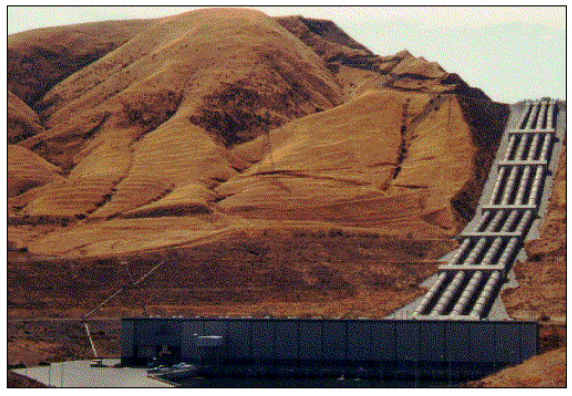
Nuclear Power Plant — U.S.A.
Nuclear Power Plant · U.S.A.
The Problem
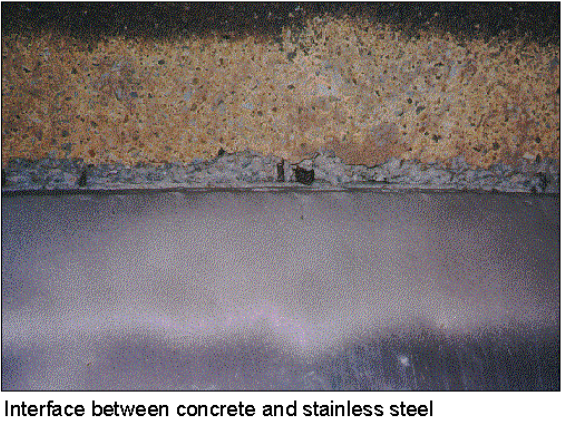
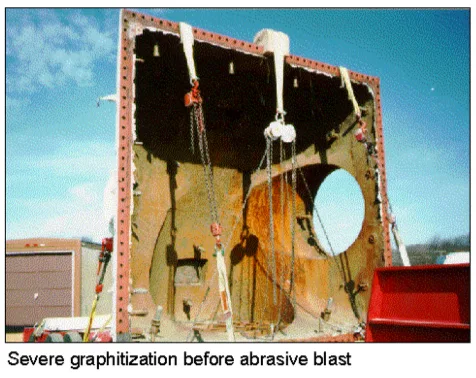
Graphitization — Structural Degradation Beneath an Intact Surface
Units Affected
8
Service Environment
Salt Water Cooling
In Service Since
1971
Eight cast iron waterboxes in salt water cooling service had developed wall thinning over decades of service. The failure mode was identified when one waterbox floor began leaking.
What is Graphitization
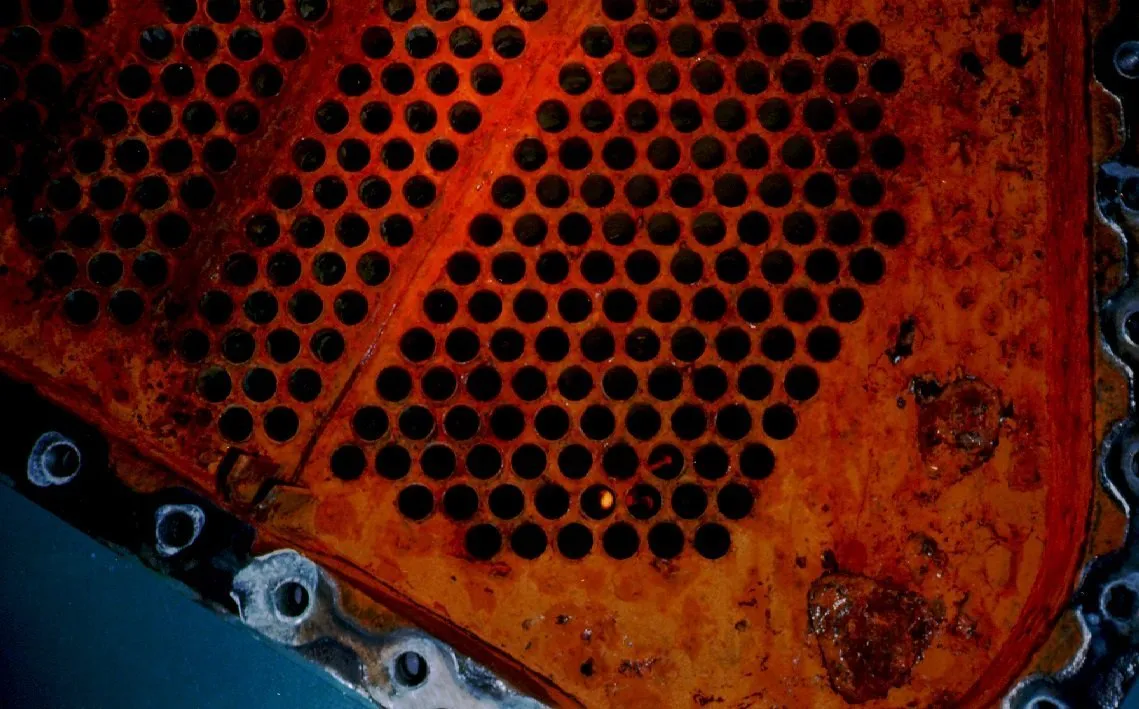
Graphitization is a form of corrosion specific to cast iron in which the iron matrix leaches out of the metal, leaving behind a soft graphite skeleton that appears visually intact but has lost virtually all structural strength and barrier function. It is volumetric degradation of the metal itself — not surface rust — and requires mechanical removal before any abrasive blast preparation can be effective.
Specification
Epoxy Primer + Rebuilding Compound + Fiberglass Composite + Topcoat
Application
8 Waterbox Interiors
Substrate
Cast Iron
Primer + Topcoat DFT
20–25 mils each
Graphitization Removal
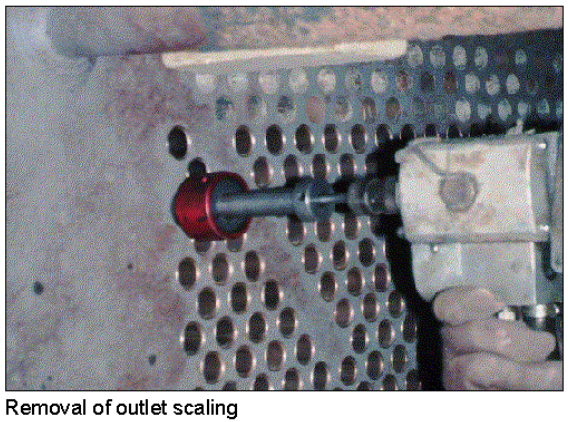
Thick graphitization mechanically removed across all surfaces. 'Bug holes' opened with small grinders to expose sound metal.
Chloride Removal
Surfaces washed with 3% hydrogen peroxide solution, then steam cleaned and pressure washed. Chlorides retained beneath a coating cause osmotic blistering and must be fully eliminated prior to final blast.
Surface Preparation
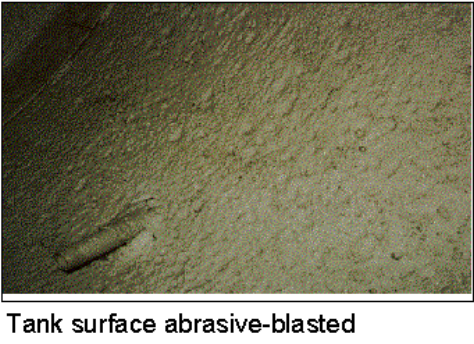
Final abrasive blast to SSPC SP-5 White Metal with a 3–5 mil minimum anchor profile.
Primer + Rebuilding Compound
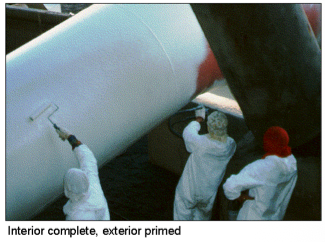
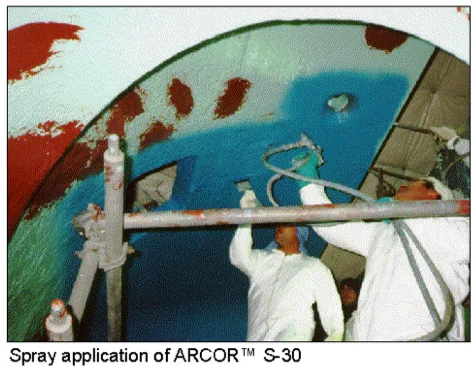
20–25 mil epoxy primer base coat applied. Epoxy rebuilding compound applied in severely pitted regions, built up to 100 mils on waterbox floors.
Fiberglass Infield Repair
A floor penetration in one waterbox was repaired with a fiberglass composite infield repair system.
Topcoat
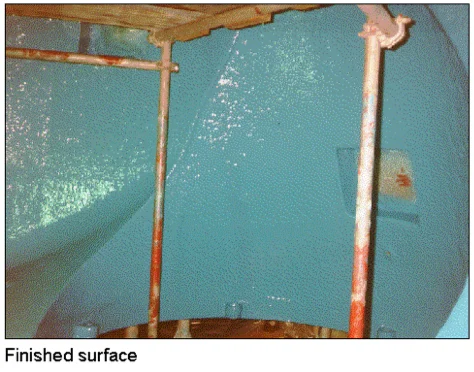
20–25 mil epoxy topcoat applied across all eight units to complete the installation.
The Result
Project completed February 1993. All eight waterboxes free of defects at completion.
High-performance epoxy systems for industrial repair and protection.