Back to Resources
Channel Head Repair: Cast Iron Graphitization and Divider Plate Rebuild
Graphitized cast iron divider plate in saltwater cooling service rebuilt with structural epoxy compound and sealed with immersion-grade epoxy, restoring full unit efficiency in March 1991.
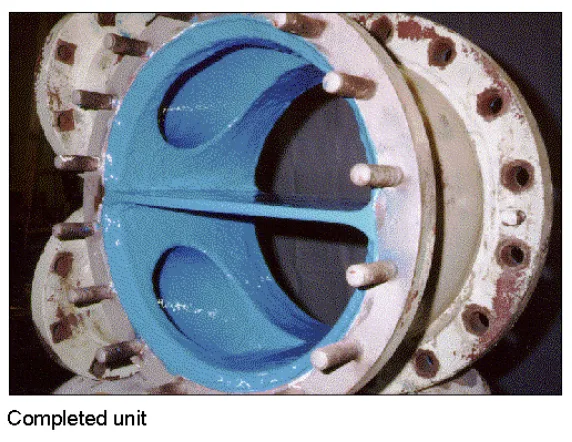
Channel Head Repair · Fossil Fuel Power Plant, USA
The Problem
Bypassed Divider Plate, Lost Efficiency in Saltwater Service
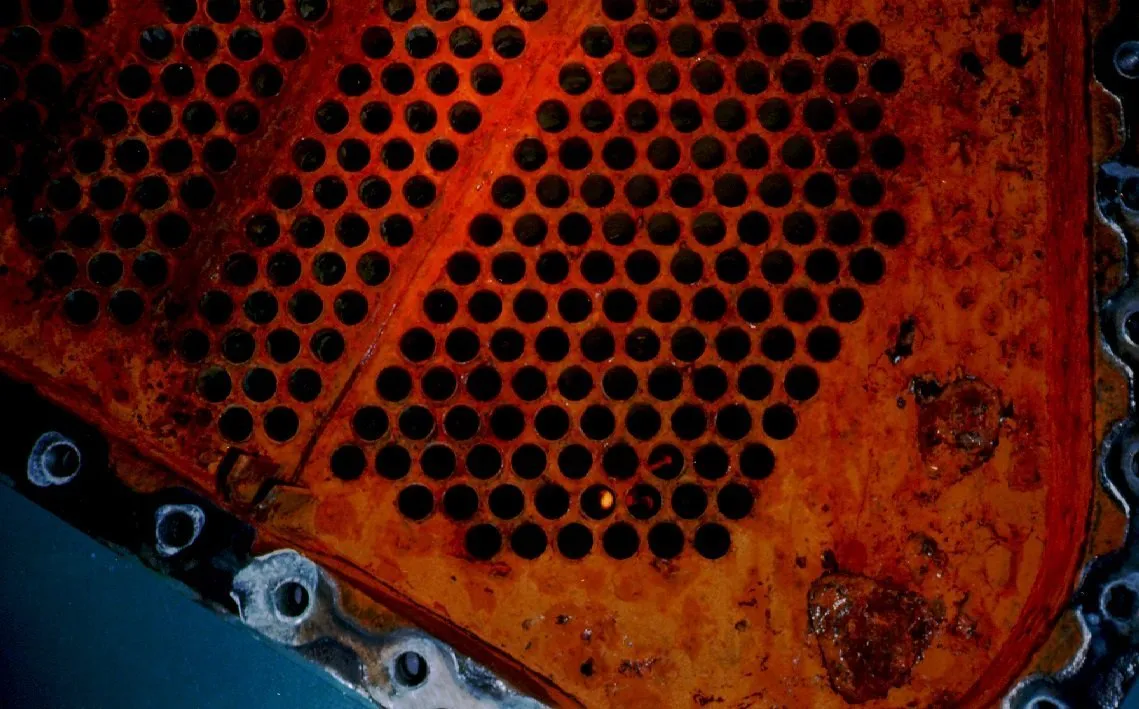
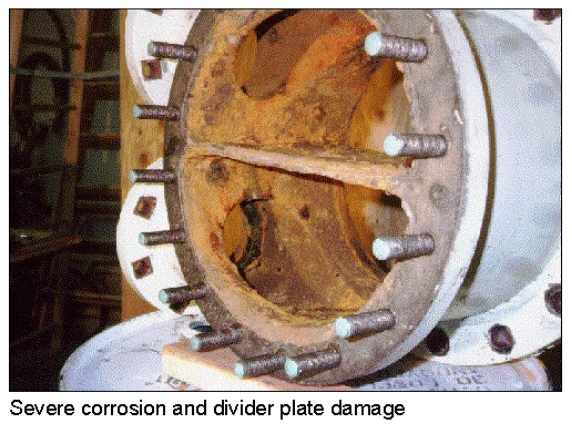
The channel head was a cast iron heat exchanger component running on saltwater cooling, one of the harshest environments a metal surface can face. Over time, the divider plate adjacent to the tubesheet had suffered severe metal loss from corrosion and graphitization.
The consequence wasn't just structural, it was operational. Cooling water was bypassing the divider plate instead of flowing through it correctly, causing a measurable drop in heat exchanger efficiency. The unit was underperforming, and the root cause was a deteriorating metal interface that traditional maintenance hadn't caught.
Graphitization
Cast iron in saltwater service corrodes through a process called graphitization. The iron matrix dissolves while graphite remains, leaving a soft, porous shell that looks intact but has almost no structural integrity. Standard coatings won't adhere to a graphitized surface and won't rebuild lost material. Most maintenance teams either replace the component or attempt a weld repair, both expensive and time-consuming during an outage window.
The Solution
In-Place Epoxy Rebuild — Geometry Restored, Bypass Eliminated
Installation
March 1991
Substrate
Cast Iron Channel Head
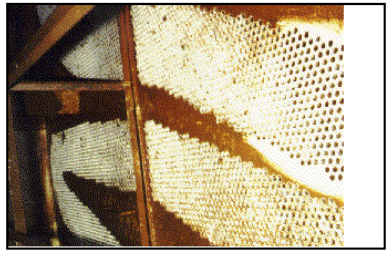
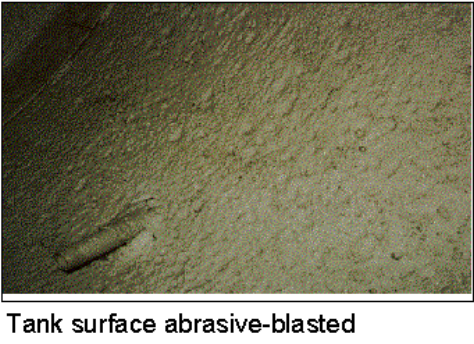
ARCOR removed the channel head and abrasive-blasted the entire surface to white metal, stripping all graphitization and corrosion products down to sound substrate. A 15-mil base coat of a high-performance epoxy formulated for immersion service in aggressive environments was applied by brush.
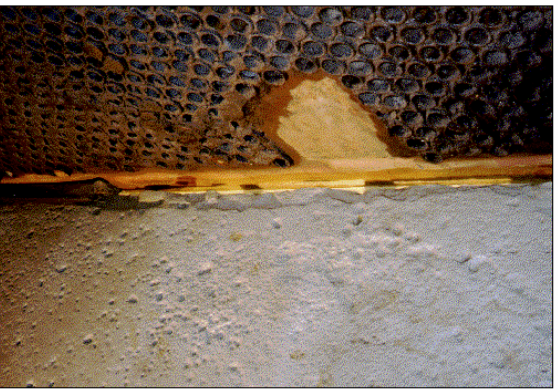
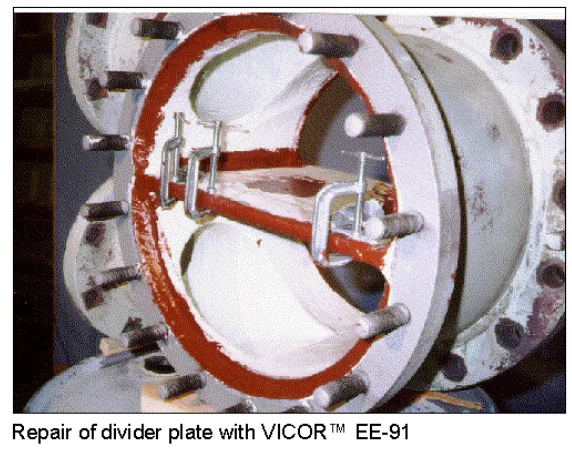
With the surface protected, ARCOR installed a structural epoxy compound between plastic clamped to the divider plate. This material is not a metal replacement. It is an epoxy compound that fills the void left by corrosion, restoring the divider plate's original profile and sealing function. For this application, that is exactly what was needed. The goal was to stop bypass flow, and geometry restoration accomplishes that.
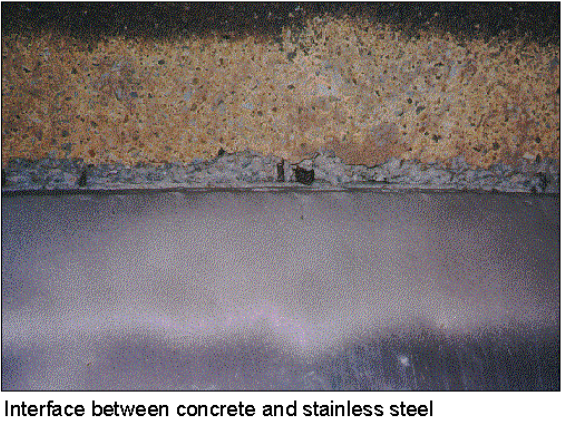
The repair area was then sanded flush with the surrounding gasket surface to ensure a proper, leak-free seal on reinstallation. A 15-mil finish coat of the same immersion-grade epoxy sealed the entire system and provided ongoing corrosion protection for continued saltwater service.
The Result
Unit efficiency was fully restored and cooling water flow returned to its intended path through the tubesheet. The installation was completed in March 1991. No additional repair has been needed since.
The component was rebuilt rather than replaced, eliminating procurement lead time, fabrication cost, and the extended outage time a full replacement would have required. The repair has held in continuous saltwater service for decades.
What This Case Demonstrates
Epoxy Rebuilding Is Not a Temporary Fix
Efficiency losses in heat exchangers are often traced back to a structural failure that nobody sees until the numbers move. By the time a divider plate has lost enough metal to allow bypass flow, the damage is already significant and traditional repair options are expensive. This project shows that epoxy-based rebuilding is not a temporary fix. When applied correctly to a properly prepared substrate, it restores both geometry and performance for the long term. The outage time spent on this repair is a fraction of what a component replacement would have required, and the result has lasted decades.

High-performance epoxy systems for industrial repair and protection.