Back to Resources
Surface Energy - Material Buildup
The Hidden Reason Things Stick
Surface energy determines how readily materials wet, adhere, and build up on a wall. This guide covers what causes it and how moisture, temperature, and surface wear make it worse over time.
Surface Science · Educational Guide
Surface Energy: The Hidden Reason Things Stick
Why does wet powder cling to one surface and slide right off another, even when both look equally smooth? The answer usually isn't hardness, polish, or slope. It's something most people never think about: surface energy.
Surface energy is behind sticking, buildup, bridging, and caking in almost every industry that handles bulk solids, powders, or wet materials. Here's what it is, where it comes from, and how it shows up on the job.
01 · The Fundamentals
Where Surface Energy Comes From
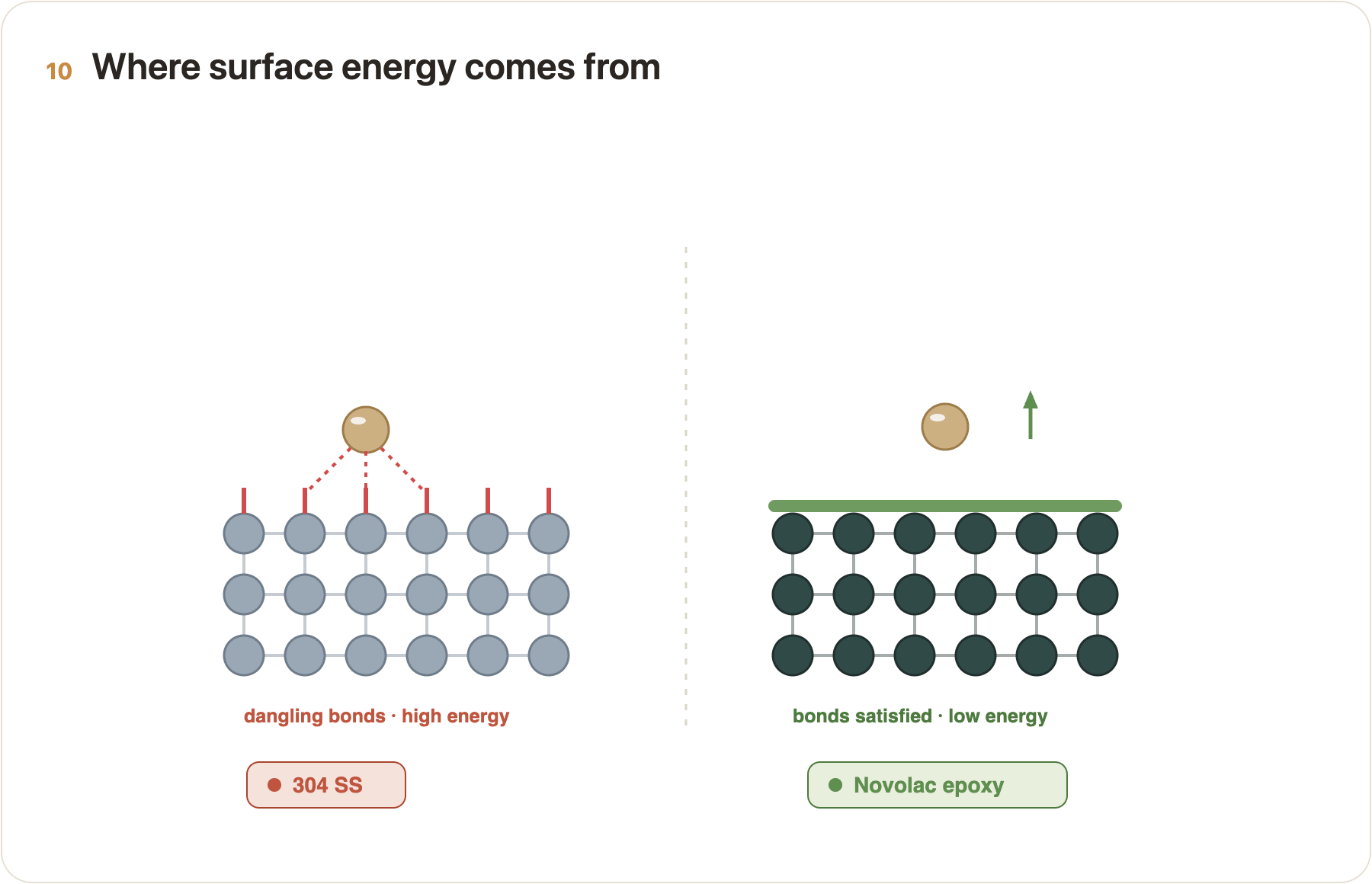
Think of the atoms inside a solid material like people standing in a crowd, holding hands with everyone around them. Every hand is taken. That's a satisfied bond.
Now think about the atoms sitting right at the surface, the outer edge of the material. They only have neighbors on one side. That means they've got a hand free, reaching outward with nothing to hold onto.
That "free hand" is stored energy, and every material wants to get rid of extra energy if it can. The moment something touches that surface, the open bond gets satisfied and the energy releases, like a ball rolling down a hill instead of sitting at the top of it. Once it rolls down, pushing it back up takes real work. That's why deposits on the wrong surface are so hard to shift.
The more open bonds a surface has, and the stronger they are, the more that surface wants to grab onto whatever touches it: water, dust, product, buildup.
- High-energy surfaces, like metals, ceramics, and glass, are held together by strong bonds, so they've got a lot of open hands reaching out. They grab onto everything.
- Low-energy surfaces (materials like PTFE, HDPE, UHMW, polypropylene, silicone, and certain epoxies) already have their bonds satisfied. There's not much left over to grab with. There's no hill to roll down, so gravity, vibration, or a bit of flow is usually enough to knock material loose again.
Quick side note: surface energy and surface tension are the same physics. We just use "tension" for liquids and "energy" for solids.
02 · Visual Evidence
Wettability: How Liquid Behaves on a Surface
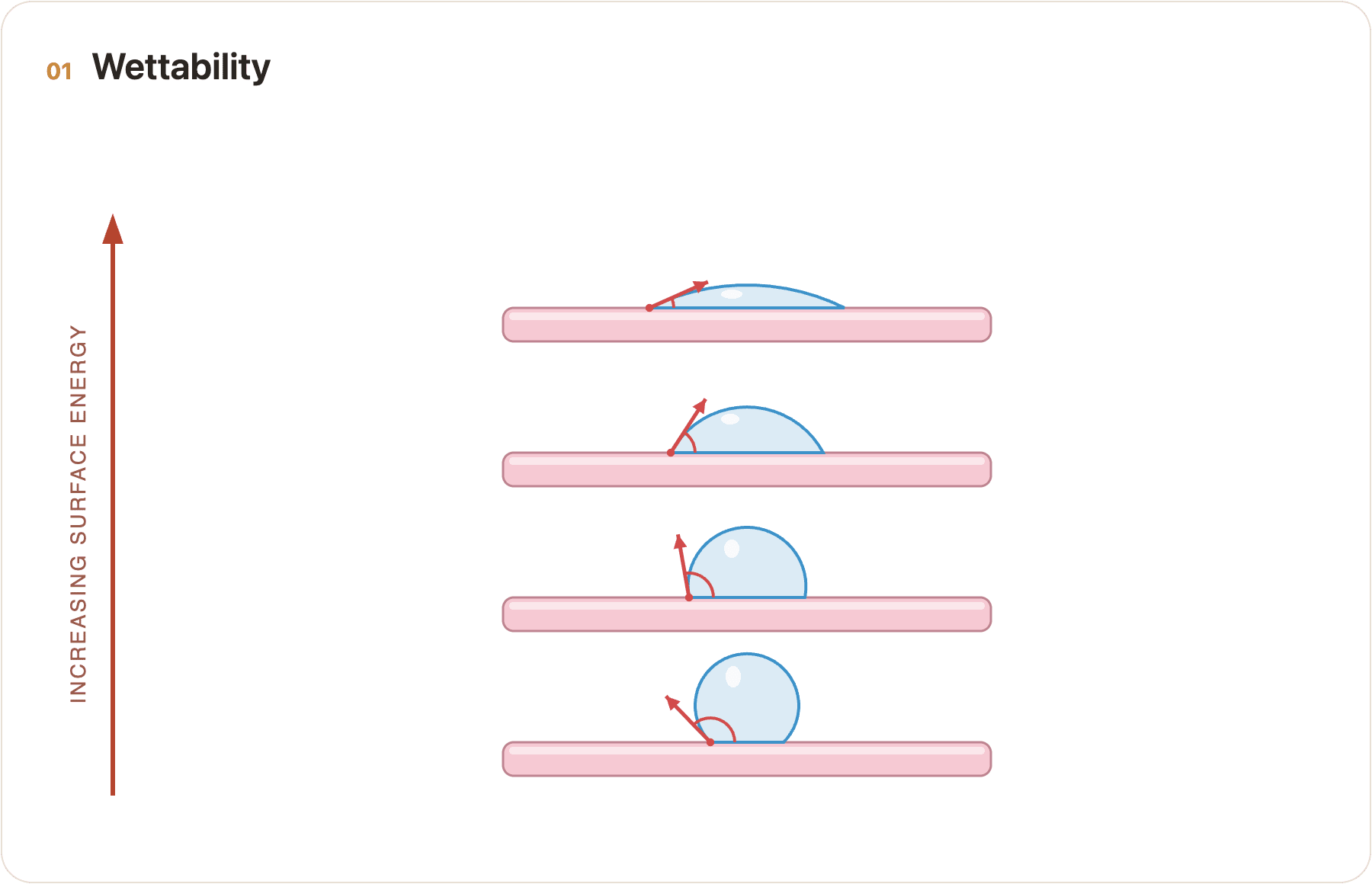
The easiest way to see surface energy in action is to watch what a liquid does when it lands.
- On a high-energy surface, a droplet spreads out flat, because the surface is pulling the liquid across it.
- On a low-energy surface, the droplet pulls itself inward and beads up, because the surface isn't offering the liquid anything to grab.
03 · Measurement
Contact Angle: How It's Measured
The technical way to measure this is called the contact angle: the angle where the edge of a droplet meets the surface.
- Low angle (droplet is flat and spread out) = high surface energy
- High angle (droplet is tall and beaded) = low surface energy
Below, the same liquid is placed on two different surfaces: bare stainless steel, and a low-energy polymer coating. It spreads flat on the steel and beads up on the coating: same liquid, two completely different reactions.
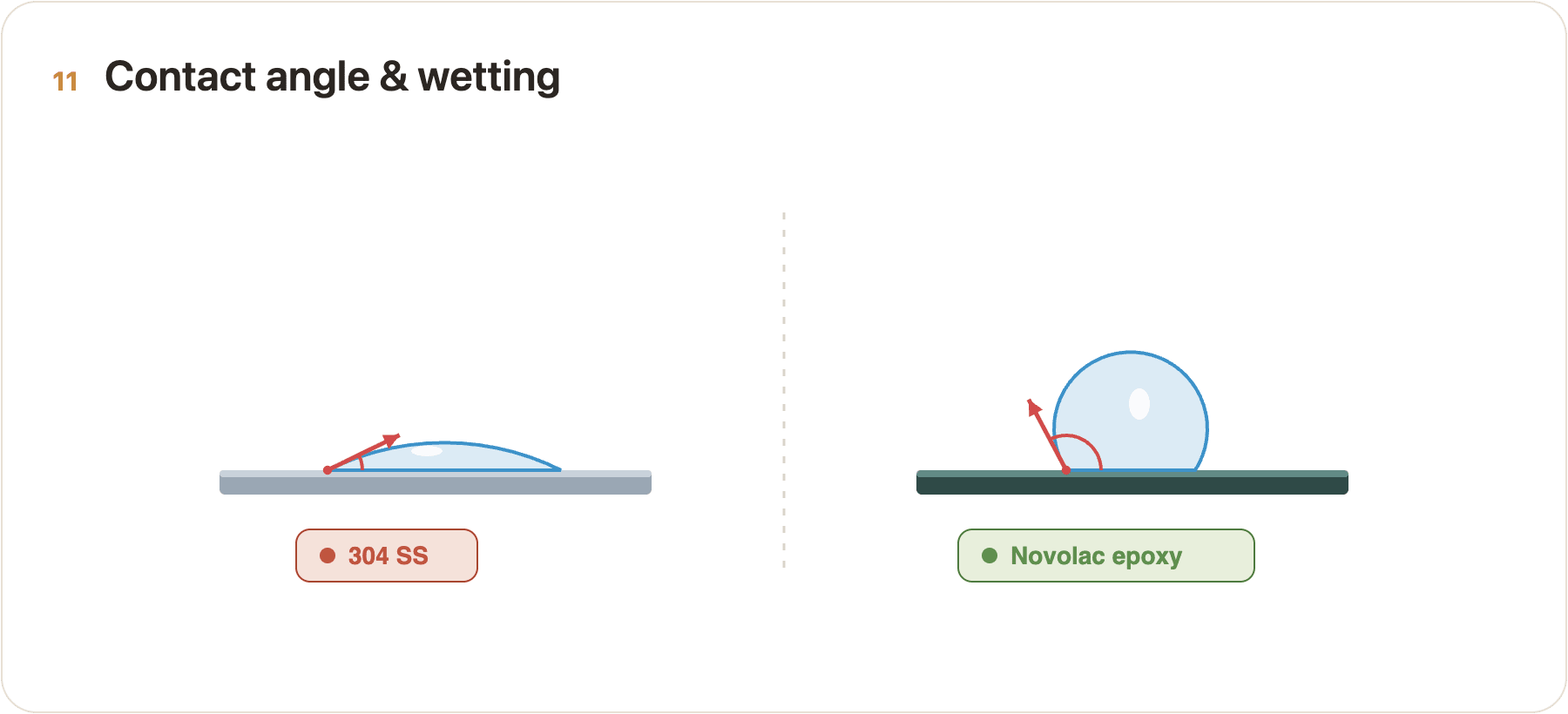
This isn't just about water. In most sticking problems, moisture is the glue holding loose material together. If liquid can't wet the wall, whatever it's carrying can't grip the wall either.
04 · Mechanisms
Adhesion: Material Sticking to the Wall
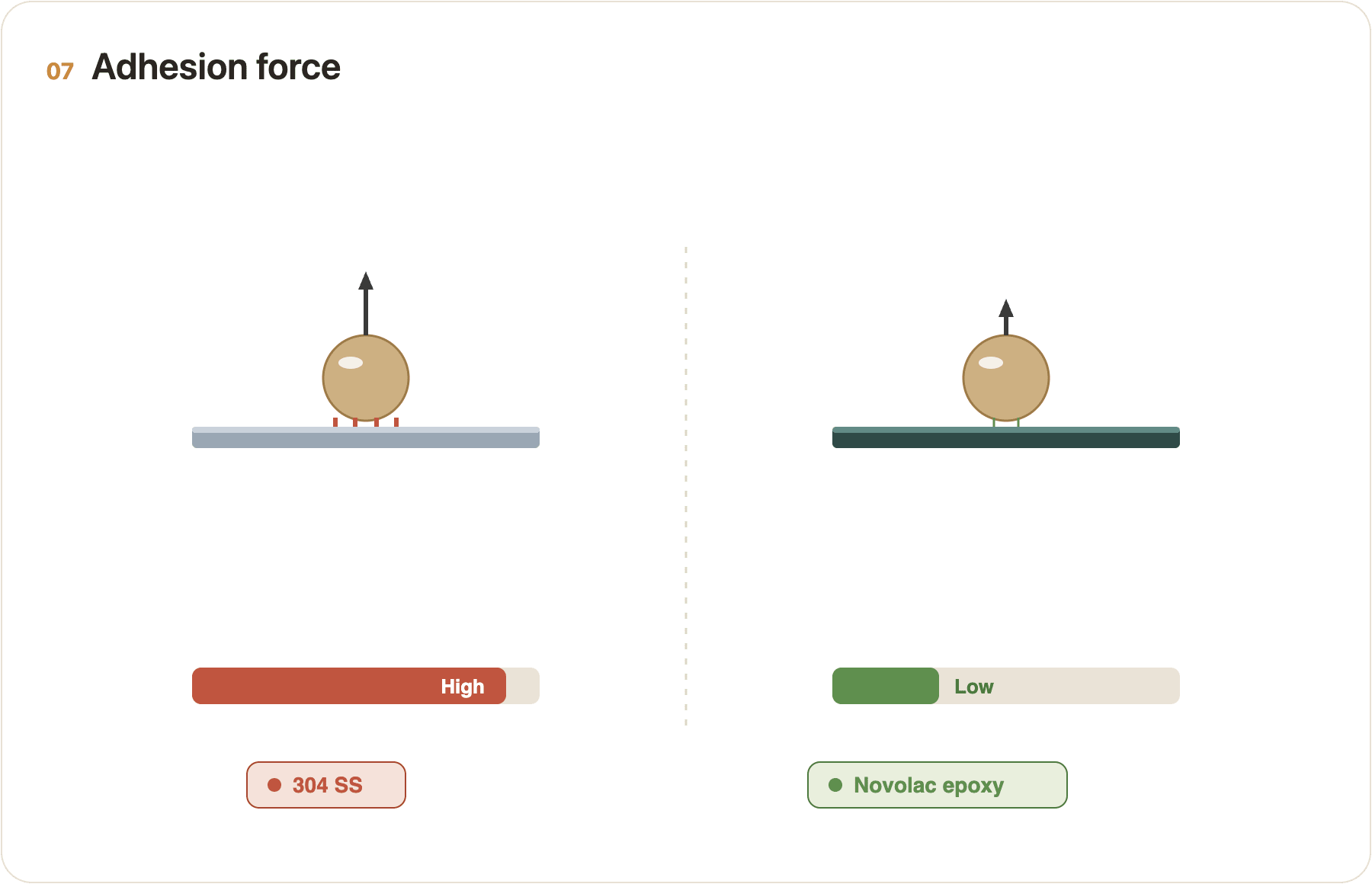
Adhesion is the attraction between two different materials, like a particle and a wall, or a droplet and a panel. Surface energy decides how strong that pull is.
A high-energy surface gives particles and moisture plenty of places to latch onto. A low-energy surface gives them almost nothing to work with.
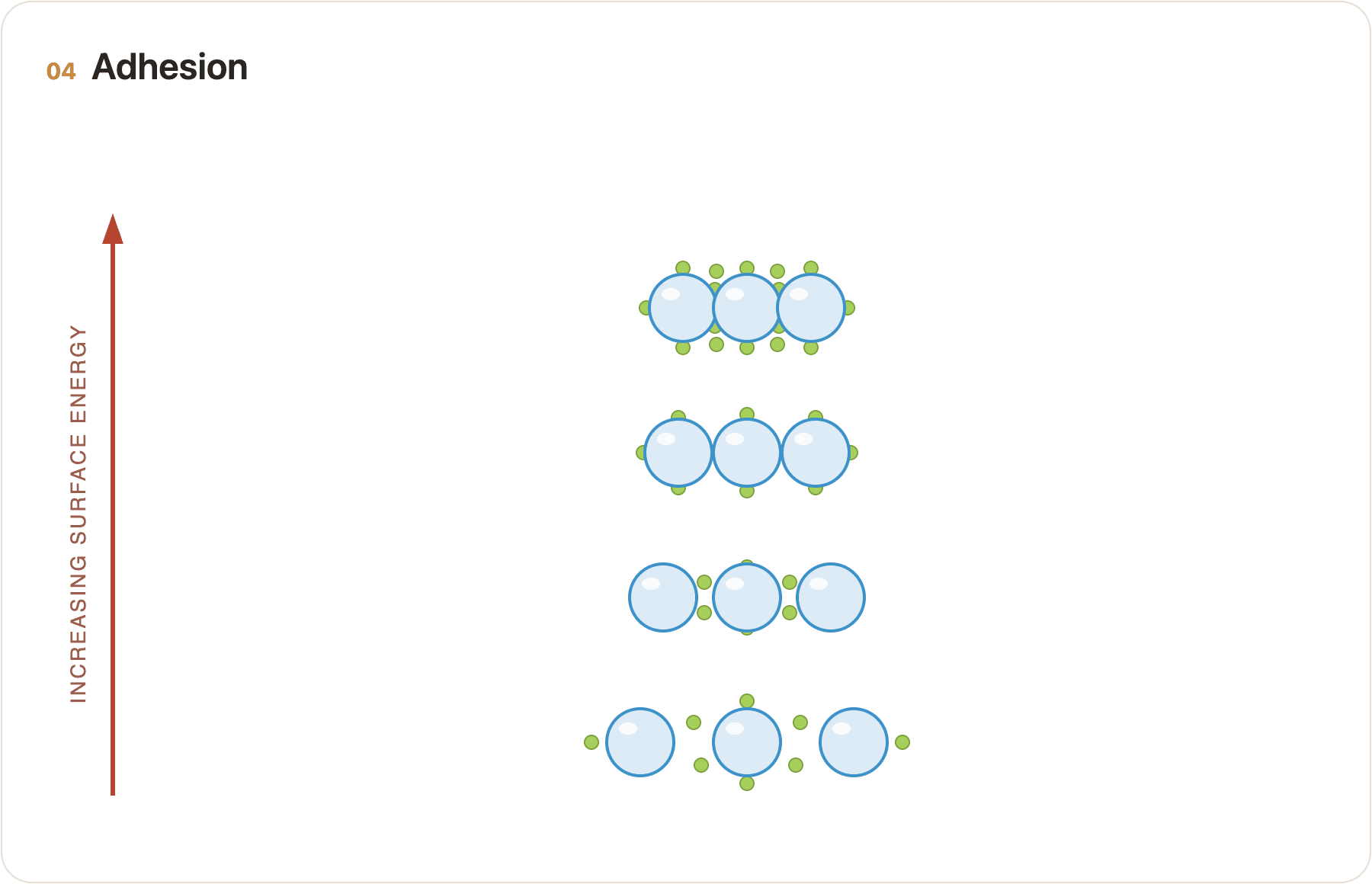
You can measure this directly by pulling a single particle off a surface and measuring the force it takes. The difference between a high-energy metal and a low-energy polymer is significant.
05 · Mechanisms
Cohesion: Material Sticking to Itself, and How Bridging Happens
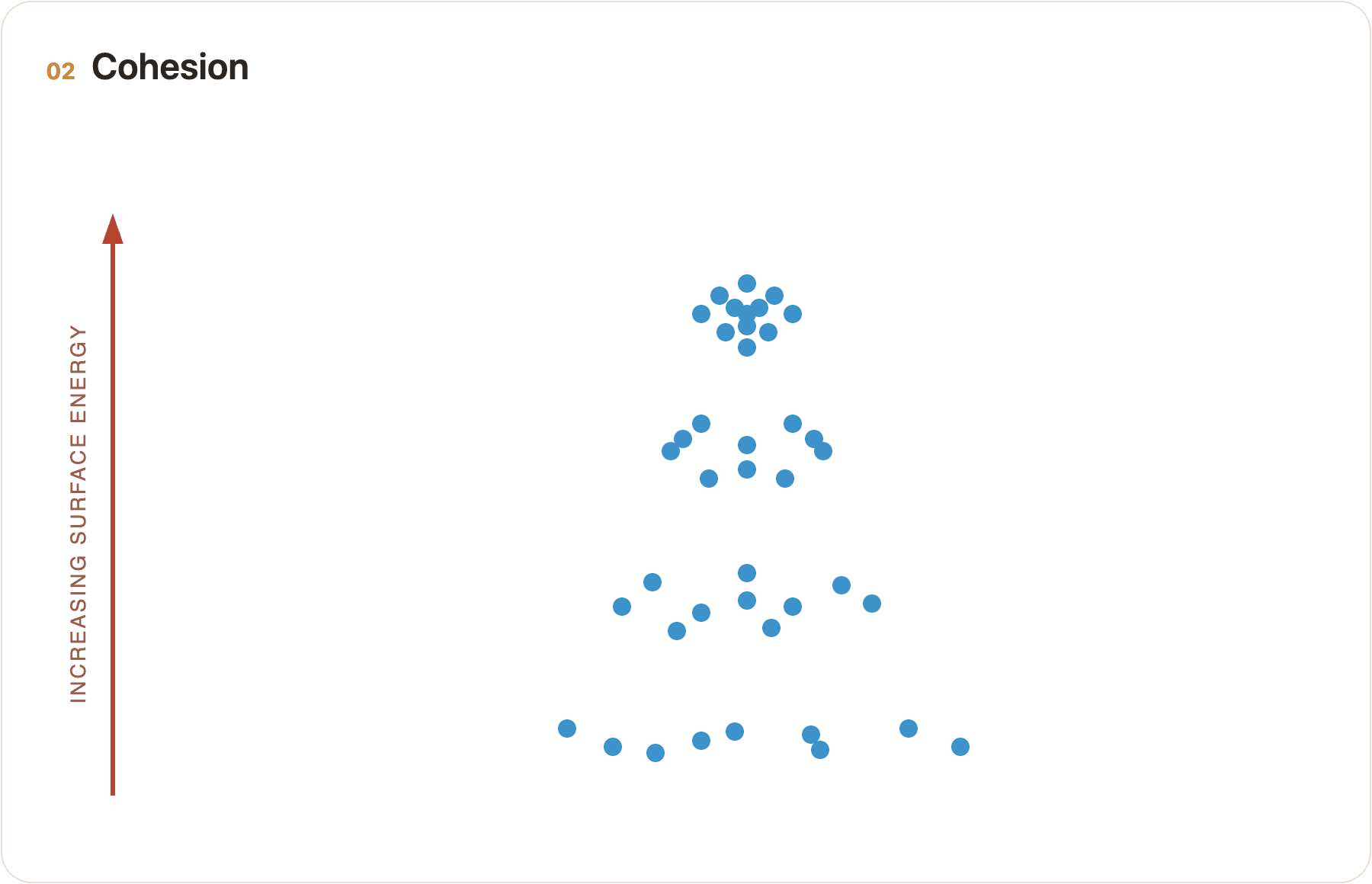
Cohesion is particles clinging to each other, rather than to the wall. Surface energy still plays a role here:
- Near a high-energy wall, particles and moisture pack together into tight, dense clumps that anchor and keep growing.
- Near a low-energy wall, the material stays looser and breaks apart more easily.
This is where adhesion and cohesion together decide whether material bridges. If material is grabbing the wall harder than it's holding onto itself, it anchors, packs in, and grows. But if the material's grip on the wall is weaker than its grip on itself, it can't get a foothold at the surface, and that's exactly the condition that lets an arch of material lock itself across an opening or a vessel wall.
The arch needs a grip on the wall to hold its shape. Take that grip away, and there's nothing for it to lean on, no matter how tightly the material is holding onto itself.
06 · Field Conditions
Why Cold, Wet Conditions Make It Worse
A sticking problem that's manageable on a warm, dry day can turn into a real headache once material shows up cold and damp. Cold and moisture each make surface energy effects stronger, and together they stack.
Moisture Does the Heavy Lifting
A thin film of water between a particle and a wall forms what's called a liquid bridge, and the pulling force in that bridge can be way stronger than the dry stickiness between the two solids alone. On a high-energy wall, water spreads out and wets everything, building strong, wide bridges. On a low-energy wall, the water can't get a grip in the first place, so the bridge barely forms.
Cold Makes Those Bridges Grip Harder
As temperature drops, water gets thicker and pulls tighter, so each bridge grabs harder and drains away more slowly. Get close to freezing, and those bridges can start to turn to ice, turning ordinary stickiness into actual ice bonding.
Cold Metal Also Works Against You
Metal conducts heat fast, so on a cold day a metal wall drops to roughly outside temperature. That cold, high-energy surface becomes a magnet for condensation: moisture collects right where you don't want it, at the wall itself. A polymer surface conducts heat much more slowly, so it stays closer to the temperature of the material moving across it, and it doesn't invite that moisture to begin with.
Put it all together and you get a feedback loop on metal walls: cold metal draws moisture, moisture builds bridges, bridges grab onto fines, and the growing buildup traps even more moisture against the wall. A low-energy surface breaks that loop right at the start.
07 · Long-Term Behavior
Surfaces Get Worse Over Time, and Rougher Surfaces Make It Worse Still
Surface energy isn't locked in when a wall is installed. Abrasion, corrosion, impacts, and temperature swings all roughen and disturb a surface over time. Every scratch, pit, and worn spot exposes fresh bonding sites, which raises the surface energy. That's the real reason a wall that worked fine when it was new can turn into a chronic sticking problem years later, even though nothing was changed on purpose.
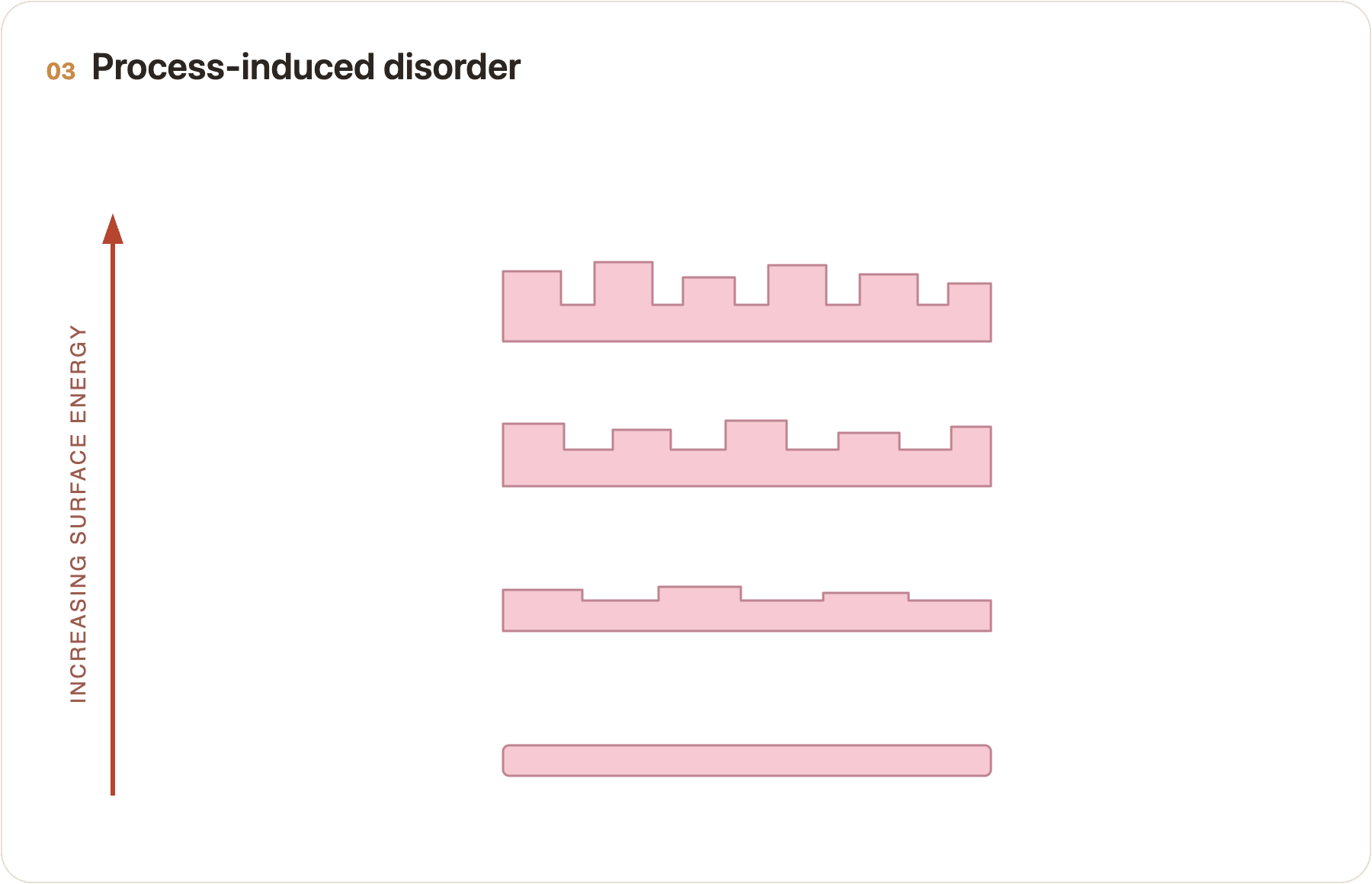
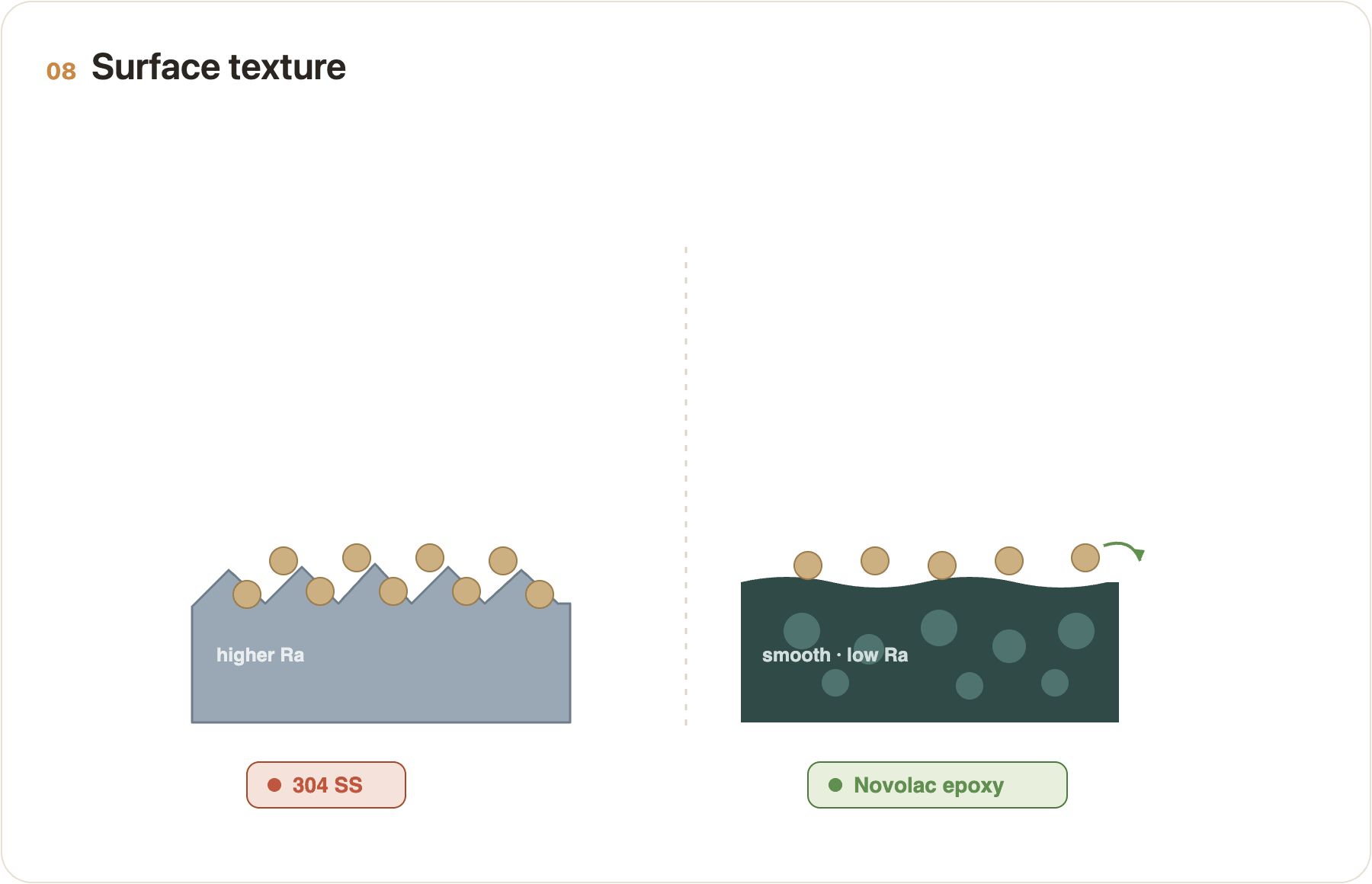
Roughness compounds the chemistry. A rough, high-energy surface gives particles physical peaks and valleys to grab onto, on top of the chemical pull: a double hit. A smooth, low-energy surface gives particles neither a chemical reason nor a physical foothold to stay put.
Worth Noting
Shine can be misleading. Polished metal can still be rough at a microscopic level, and no matter how it's polished, it's still chemically high-energy. It will keep getting rougher, and stickier, with every year of service.
08 · Seeing It in Practice
Sliding and Release
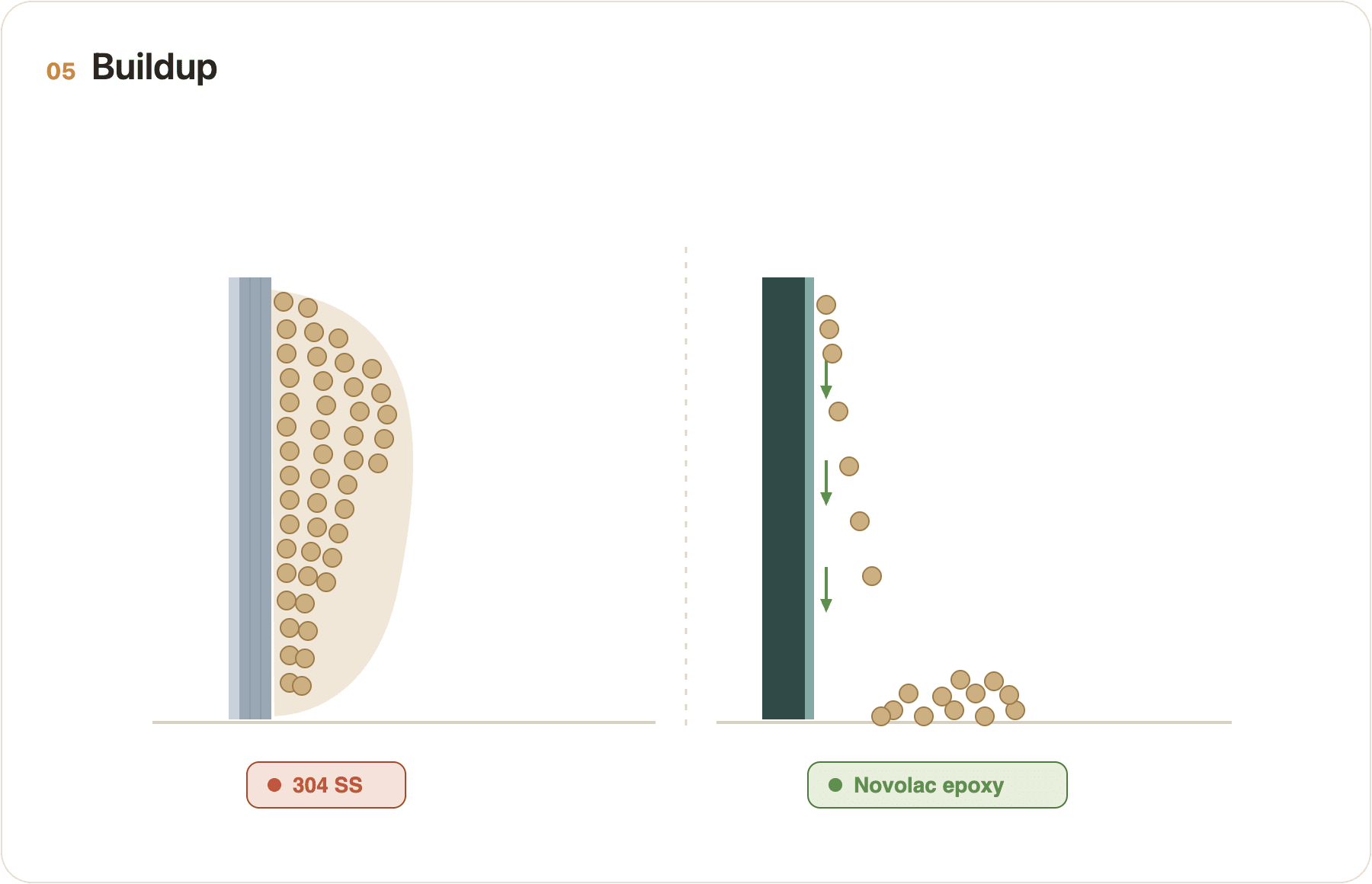
Stack together wetting, adhesion, cohesion, moisture, cold, and roughness, and a clear pattern emerges: on a high-energy surface, material wets in, grabs on, packs together, and grows into buildup, bridging, and blockages. On a low-energy surface, the weakest point sits right at the wall, so material lets go and falls away instead of piling up.
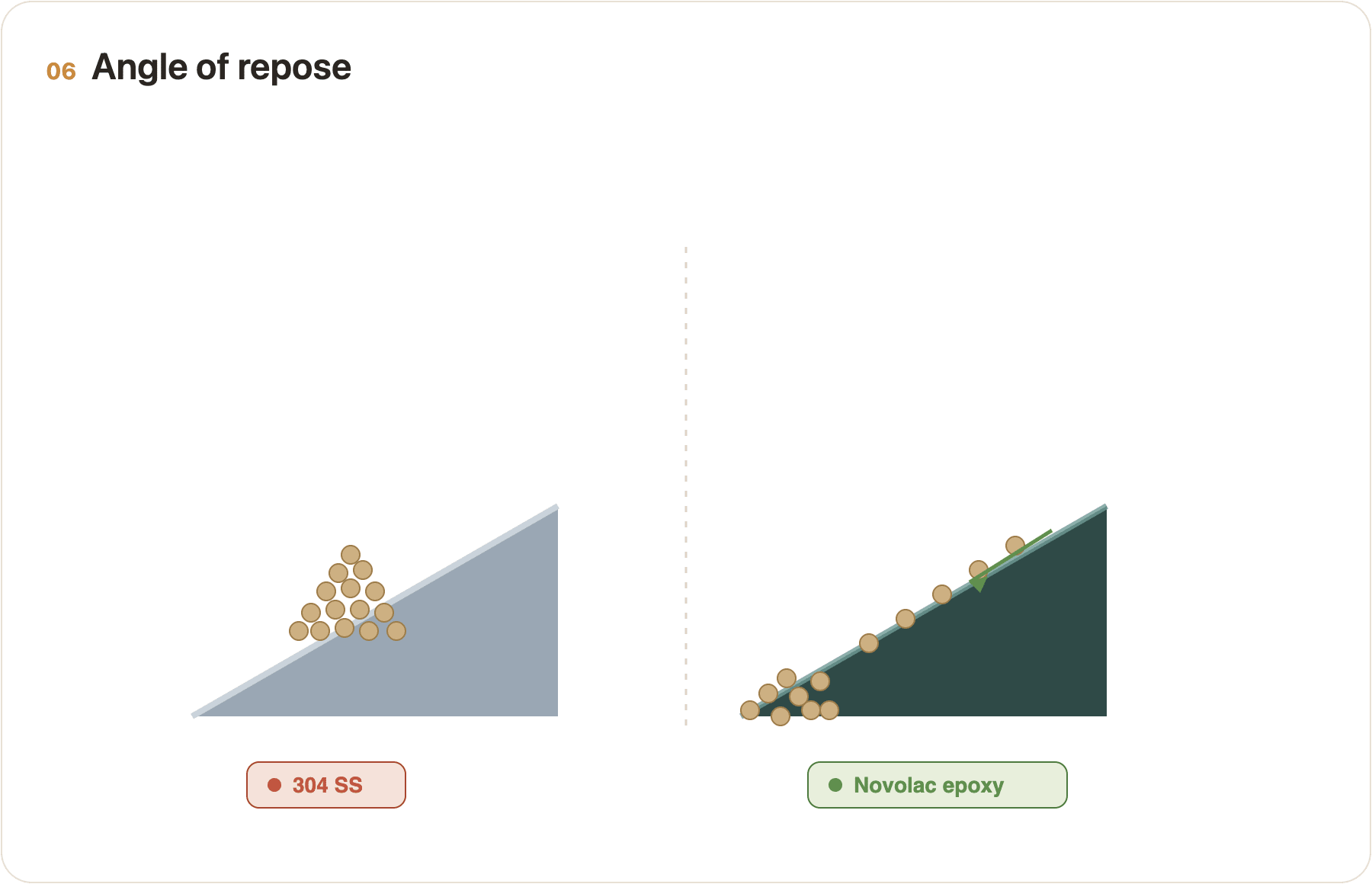
A simple slope test shows this clearly. Set damp material on an incline: on a high-energy surface, it clings well past the angle where it "should" slide. On a low-energy surface, the same material lets go at a much shallower angle. In everyday terms, that means less wall friction: material flows more reliably, and openings are less likely to bridge and clog.
The Takeaway
Ask What the Surface Wants to Do, Not How Smooth It Looks
When material sticks where it shouldn't, the instinct is to reach for something harder, smoother, or shinier. But none of that is the determining factor. What decides whether material sticks is energy: how much the surface wants to bond with whatever touches it. High-energy surfaces, including polished metal, chemically invite material to grab on, and they only get worse as they wear.
So next time you're looking at a wall, chute, or vessel, don't just ask "how smooth is it?" Ask how much that surface wants to bond with whatever touches it. Pick the surface with the least to offer, and the material moving across it has no reason to stay.

High-performance epoxy systems for industrial repair and protection.