Back to Resources
Cyanide Secondary Containment: Joint Repair and Chemical Resistant Lining
Chemical Manufacturing Plant — U.S.A.
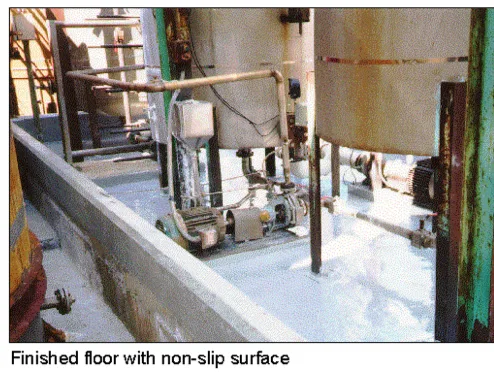
Chemical Manufacturing Plant · U.S.A.
The Problem
Cyanide Containment — Regulatory Compliance and Joint Integrity
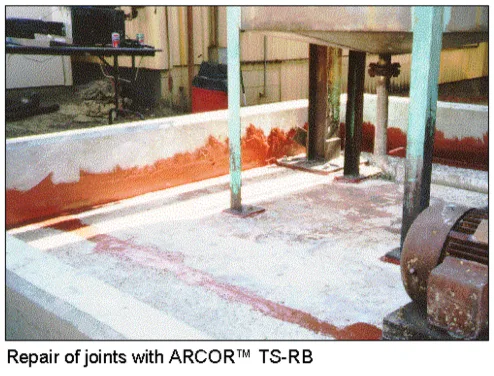
A concrete secondary containment area for liquid cyanide had sustained splash and spill erosion requiring repair. Seams in the concrete floor and the floor-to-wall joint required attention before any lining system could be applied.
Scope of Failure
Secondary containment for cyanide is a regulatory requirement — coating failure is not an asset reliability event, it is an environmental and safety event. The specification had to address both joint integrity and chemical resistance to concentrated cyanide.
Joint Integrity
Floor seams and floor-to-wall joint required repair before any lining could be applied.
Chemical Resistance
Full lining system required to resist concentrated liquid cyanide exposure.
Specification
Joint Repair + Two-Coat Chemical Resistant Epoxy + Non-Slip Finish
Application
Containment Floor & Walls
Substrate
Concrete
Finish
Non-Slip Aggregate
Surface Preparation
High-pressure washed, cleaned with TSP (trisodium phosphate) to remove oils and organic contamination, then high-pressure washed again to ensure no cleaner residue remained that could compromise adhesion.
Joint Repair
After thorough drying, epoxy rebuilding compound installed into all floor seams and applied as filler at the floor-to-wall joint.
Chemical Resistant Lining
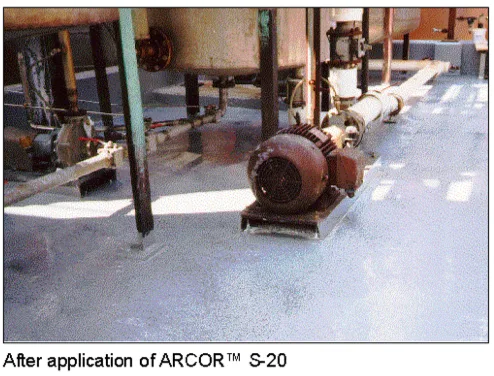
Two coats of chemical resistant epoxy applied over the full surface for cyanide protection.
Non-Slip Finish
Coarse blast aggregate dispersed over the second coat while wet. A practical requirement in a containment area where spills are an anticipated event and slip hazard during spill response is a real secondary risk.
The Result
Completed April 1991. No repair required since installation.

High-performance epoxy systems for industrial repair and protection.