 Back to Resources
Case Study: FGD Duct Lining — Long-Term Service Life
FGD ductwork is subject to simultaneous corrosion mechanisms that must all be addressed in the lining specification to achieve acceptable service life.
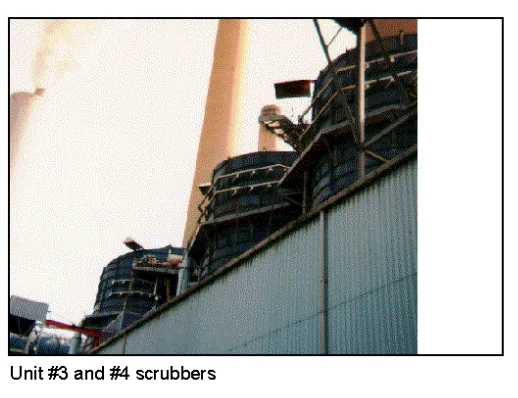
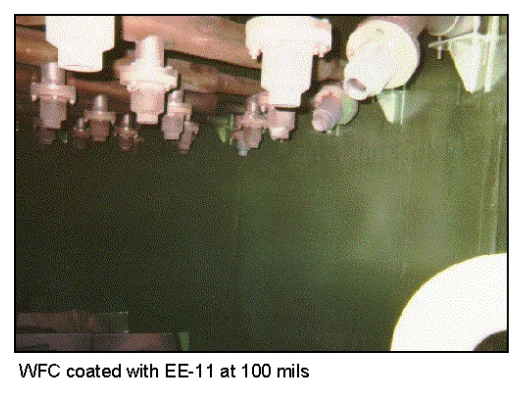
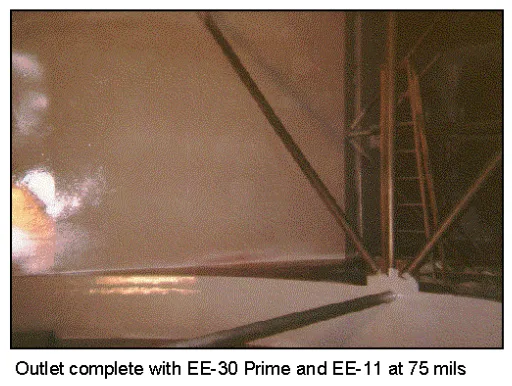
WFC & Outlet Ducts, Unit 3 & 4 Scrubbers · Midwest U.S. Coal Plant
The Problem
Simultaneous Corrosion Mechanisms in FGD Ductwork
FGD ductwork is subject to simultaneous corrosion mechanisms that must all be addressed in the lining specification to achieve acceptable service life.
Sulfuric Acid Condensation
Occurs when flue gas temperatures fall below the acid dew point (120–150°C, SO₃-dependent), depositing acid directly on duct wall surfaces.
Chloride Attack
HCl in the flue gas compounds the chemical load on lining surfaces throughout normal operation.
Particulate Abrasion
The scrubbing process runs continuously against lining surfaces, requiring ceramic-grade abrasion resistance.
Thermal Cycling
Repeated mechanical stress from startup, shutdown, and load changes. Coatings with insufficient flexibility develop microcracks — providing acid direct access to the substrate.
Critical Variable
The Cold Wall Effect
The temperature gradient between the hot inner gas stream and the cooler outer duct wall drives acid condensation at the wall surface during normal operation. This is a continuous thermodynamic condition, not an intermittent risk. Lining systems not specified to account for it experience accelerated degradation at the substrate interface.
The Solution
Epoxy Novolac Lining System
Installation
Spring 1994
Substrate
Carbon Steel Ductwork
System Thickness — Specified Above Standard Industrial Ranges
| Location | System Thickness |
|---|---|
| WFC Duct | 100 mils |
| Outlet Duct | 75 mils |
The topcoat was selected for three concurrent performance requirements:
Chemical Resistance
Concurrent resistance in aggressive acid and alkali environments via ceramic-filled high-functionality epoxy novolac formulation.
Abrasion Resistance
Ceramic-reinforced matrix to withstand continuous particulate impingement from the scrubbing process.
Flexibility
Reactive flexibilizing agents allow the coating to accommodate substrate expansion and contraction through thermal cycling without microcracking. Primer selection varied by location based on substrate condition and exposure requirements.
The Result
The lining has been in continuous service since Spring 1994. Minor annual touchup has maintained full performance.
Categories: Flue Gas Desulfurization, Maintenance & Repair